Key takeaways
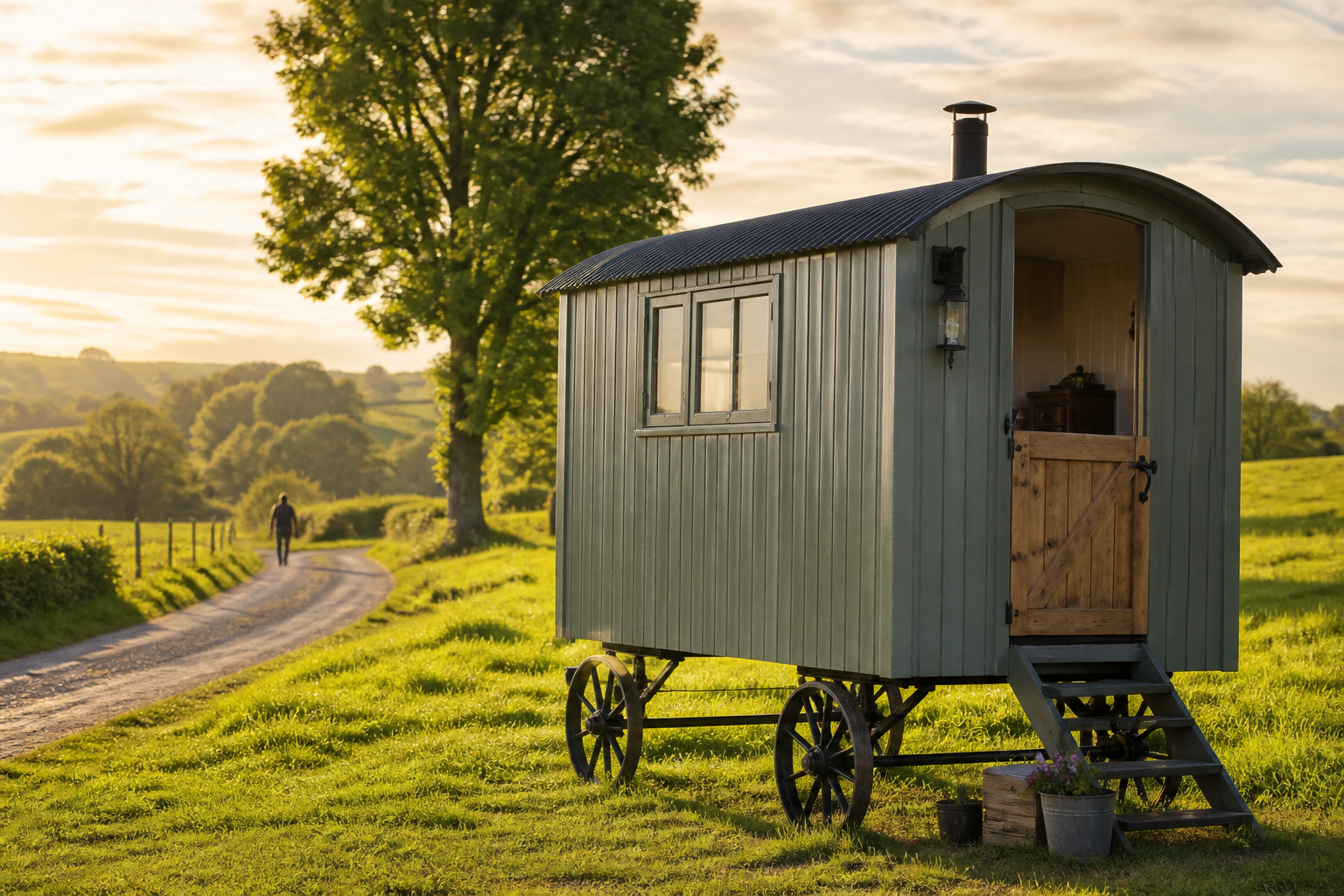
- A working hut sits on wheels so a shepherd could sleep beside the flock during lambing.
- Workshops still build a steel chassis, timber frame, and curved corrugated roof.
- UK planning often treats a movable hut as a caravan under the 1960 Act, not as a house.
- Holiday guests should book a listed stay, not assume every painted hut is a campsite.
Featured snippet: A wheeled timber cabin on a steel chassis, built so a shepherd could fold sheep across downland and sleep on site. Modern makers keep that proportion for glamping, garden rooms, and farm stays.
What a wheeled hut actually is
Handcrafted shepherd huts are wheeled timber cabins built on a chassis so a shepherd could stay with the flock through lambing. The shape is a rectangular box on iron wheels, with a curved roof and a stable door. Glamping and unique stays on this site use that same silhouette for overnight guests.
Dorset maker Plankbridge traces the form to a 1596 line about a cabin “going upon a wheel,” then to Victorian corrugated iron and to Gabriel Oak’s hut in Thomas Hardy’s Far from the Madding Crowd. Indoor lambing later made many huts redundant. Crews shoved them into woods or used them as stores by the 1950s.
Guests searching “meet the maker” want the workshop logic, not an invented interview. This page explains the object, the build, and the planning test. Named quotes come from published maker and statute pages only.
How workshops still build them
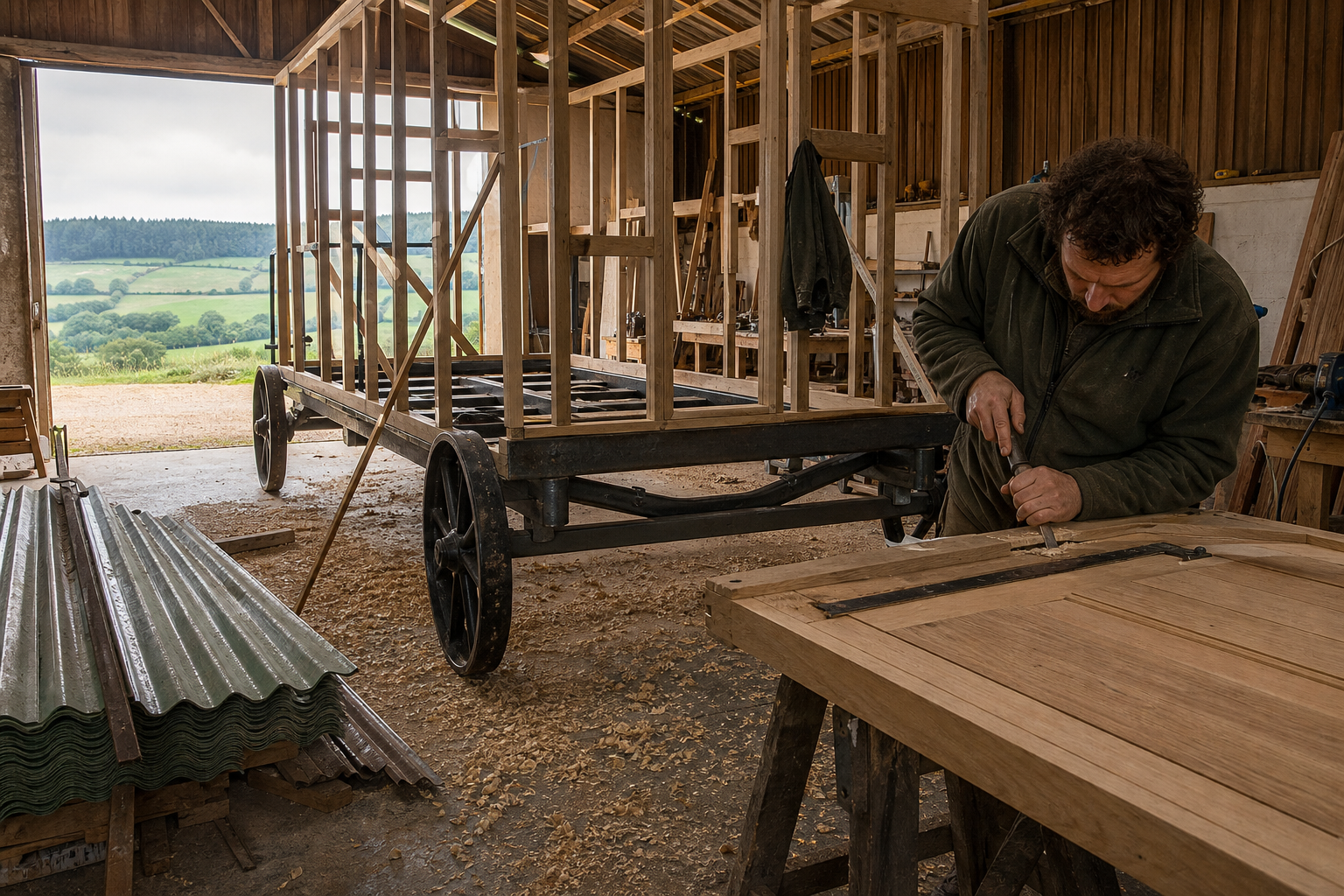
Makers start with a steel chassis. A rolling chassis keeps all four wheels on fixed axles. A turntable chassis lets the front wheels steer when the hut must move between fields. Cast iron wheels still signal a working hut rather than a shed on blocks.
Joiners then raise a timber frame, add insulation, a breathable membrane, and corrugated iron on the curve. Interiors take tongue-and-groove boarding, a pot belly stove, and a box bed with space that once held orphan lambs. Plankbridge’s history note records that layout from agricultural use, not from marketing copy.
Wales listing Abercorran Shepherd Huts shows the guest-facing result: a finished hut sited on a farm, booked as a stay. Build time varies by workshop. Public maker pages do not publish a single industry-wide week count, so this guide does not invent one.
Browse unique hut and canvas stays
The caravan test that changes planning
English planning rows about huts turn on one statute sentence. Section 29 of the Caravan Sites and Control of Development Act 1960 defines a caravan as a structure designed or adapted for human habitation which is capable of being moved from one place to another, whether towed or carried on a vehicle or trailer. Tents are excluded. Railway rolling stock on rails is excluded.
Devon firm Tozers reports that the Valuation Office Agency applied that caravan definition to shepherd’s huts and glamping pods where the units were not permanently affixed. The Agency treated intention as irrelevant. Capability of movement was the question. Community Infrastructure Levy did not bite on those units because a caravan is not a building for that charge.
Holiday use still needs control. Tozers states pods should be occupied for short-term, holiday-letting purposes, not as a person’s sole place of residence. Wheels alone do not grant a campsite licence. Our curation standards treat host planning status as the host’s duty. This directory does not certify a Lawful Development Certificate.
| Test | What hosts check | What guests should assume |
|---|---|---|
| 1960 Act “caravan” | Structure can be moved; not a tent | A hut may be a caravan in law, not a house |
| VOA / CIL (Tozers, 2021) | Not permanently affixed | CIL may not apply; planning still might |
| Occupation | Holiday let, not sole residence | Book nights; do not move in |
How to book a hut stay
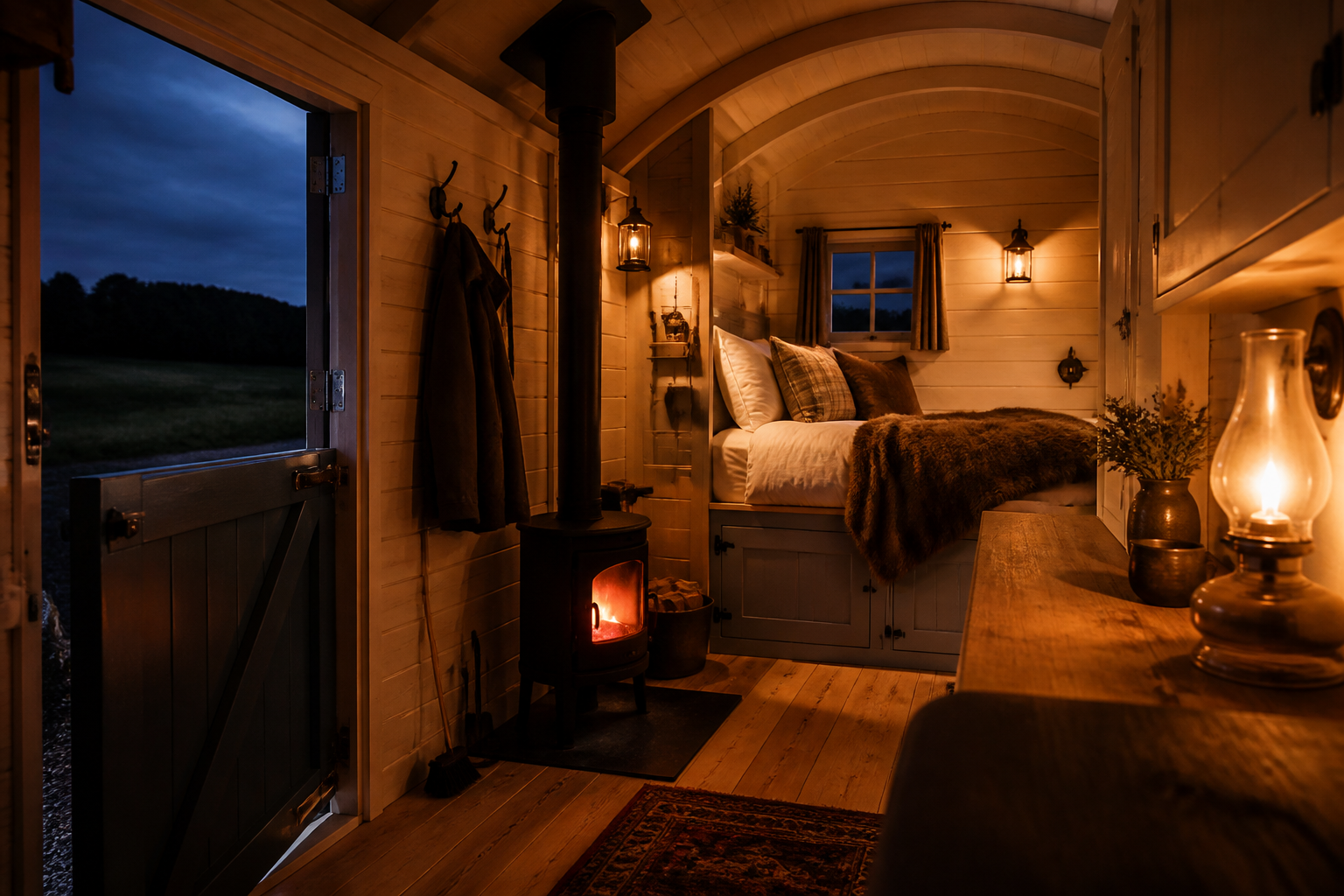
Guests book a listed farm or glamping pitch, then confirm stove rules, water, and parking with the host site. Farm stays often pair a hut with livestock, tracks, and a farmhouse bathroom block. Canvas-only fields are a different product.
- Open the listing and read the host website URL in the booking card.
- Check whether the unit is a hut, cottage, dome, or grass pitch.
- Ask about open flames. Some Highland sites ban fire pits outright.
- Arrive with bedding unless the host states linen is included.
More field notes live in the Tractors & Tents journal. Pair this craft guide with essential gear for autumn camping when the stove is the only heat source.
Frequently asked questions
What is a shepherd's hut made of?
Historic working huts used a timber body, iron wheels, and a corrugated iron roof. Modern workshops add a steel chassis, insulation, and hardwood joinery. Exact species and paint systems vary by maker.
Do you need planning permission for a shepherd hut?
Use decides the answer. A movable hut may meet the 1960 Act caravan definition. Commercial holiday letting and permanent dwelling use still attract planning control. Confirm with the local planning authority, not with a listing page.
Are shepherd huts classed as caravans?
They can be. Section 29 asks whether the structure is designed for habitation and capable of being moved. Tozers records a VOA view that huts and pods met that test where they were not fixed to the land.
How long does a handcrafted hut take to build?
Public workshop pages describe process, not a single calendar. Lead times change with chassis, joinery, and paint. Ask the maker for a dated quote.
What is the difference between a shepherd hut and a tiny house?
A hut keeps wheels, a narrow rectangular plan, and a curved roof. Tiny houses often sit on trailers with house-like rooms and services. Planning tests still turn on movement and use.
Can you stay in a shepherd hut in the UK?
Yes, where a host lists a hut as holiday accommodation. Search glamping inventories and farm stays. Unbooked huts in fields are not open pitches.
Related reading
Book the hut, then keep the stove fed
A hut earns its keep when the chassis still could move and the stove still throws heat after a wet walk. Confirm the host page before you pack. More guides like this appear when you search ‘Tractors and Tents shepherd huts’ on Google.